
>75Moz²
Defined gold equivalent of the Nubian Shield, a near geological mirror of the Arabian Shield, despite limited and mostly artisanal exploration and extraction.
>25Moz²
Defined gold equivalent of the Arabian Shield. With modern exploration now enabled by political will, the potential for major new gold and copper discoveries is evident.

SAUDI VISION 2030
In 2016, Mohammed bin Salman, now Saudi Arabia’s Crown Prince, unveiled Vision 2030 ¹.
The plan represents not just an economic strategy, but a comprehensive reimagining of the country’s future, making its success crucial for the country's long-term stability and prosperity.
A key pillar of Vision 2030 ¹ is the diversification and growth of the Saudi Arabian economy. Recognising the significant value locked in their subterranean ore bodies, the government set about transforming its mining sector, creating an attractive environment for foreign exploration and investment.
SAUDI VISION 2030
Saudi government announces plans to attract $18 billion in mining investments by 2020

FISCAL REGIME & INCENTIVES

Attractive fiscal regime
- 100% foreign ownership
- 1-4.5% royalty with 1-5 year holiday
- 20% corporate, 5% div. withholding tax
Incentivised exploration
- US$182m explo. incentive budget
- Up to US$2m ~40% net back per permit
- Wage subsidies for KSA nationals
Access to geological data
- Large areas of unstaked ground
- Geophys, geochm, mapping
- >3,750 digitised legacy reports
Feasible permitting
- Competitive auctions (no setup)
- Low staking / holding greenfield cost
- Options for JV and acquisition
Low-friction logistics
- Limited vegetation and population
- Expansive sealed road network
- Low cost diesel and electricity
Unique geology
- ~45%: VMS (Cu-Au Zn)
- ~40%: Orogenic (Au)
- ~15%: Porphyry-epithermal (Cu-Au)
10 Moz

Mansourah Massarah
5Moz
Ar Rjum
3Moz
Bulgah
3Moz
Ad Duwayhi
8.4Moz AuEq
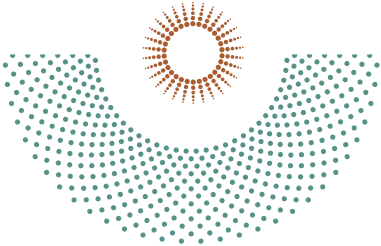
Hassai (Sudan)
2.5Mt CuEq metal
Bisha (Sudan)
1.3Mt CuEq metal
Jabal Sayed (KSA)
¹ Source: Investsaudi (https://investsaudi.sa/sectors/mining-metals); Vision2030 (https://www.vision2030.gov.sa/en/explore/strategies/strategy-for-the-mining-sector).
² All deposit sizes given in AuEq for those with >50% by value of gold, and CuEq for those with >50% Cu, based on 100% of contained metal, using spot prices as of April 22nd 2026 (US$4,754/oz Au, US$77.93/oz Ag, US$13,534/t Cu, US$1,968/t Pb, US$3,471/t Zn). Stated endowments are a combination of published Measured, Indicated and Inferred resources and published historic production. Given the resources are third party resources, the Company is not able nor is it required to make assumptions concerning the likely recoveries of metal equivalents in the resource estimates. Readers should be aware that the exclusion of recovery factors in the metal equivalent conclusions may lead to an immaterial overstating of the mineral resources and ore reserves disclosed herein.